
For many years, international supply chains were designed around a relatively simple objective: move products efficiently from origin to destination. Once goods arrived, the logistics process was considered complete. Packaging was unloaded, removed, recycled locally, or discarded, while the supply chain continued moving forward.
That operating model is now beginning to change. Across Europe, companies are gradually moving toward more circular logistics structures in which packaging continues flowing through the supply chain after delivery. As reusable packaging systems become more common, reverse logistics is evolving from a secondary operational activity into a core part of supply chain planning.
The transition is accelerating as European markets prepare for the implementation of PPWR in August 2026. The regulation is expected to strengthen the focus on packaging reuse, recovery processes, traceability, and waste reduction throughout the movement of goods into Europe.
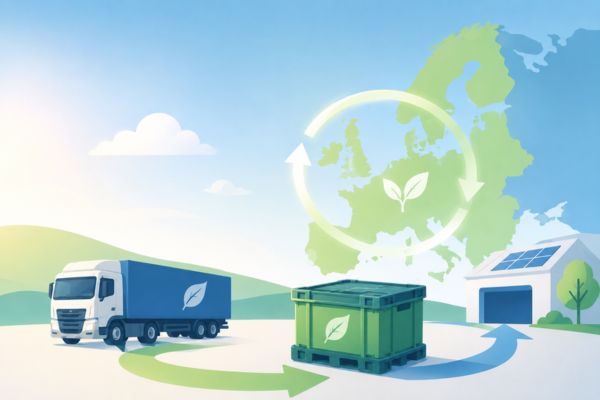
Packaging Flows Are Becoming Bidirectional
One of the most important operational changes taking place across global supply chains is the transition from one-way packaging movement toward bidirectional logistics flows.
Traditionally, companies focused primarily on outbound transportation efficiency. Today, many organizations are beginning to evaluate what happens to packaging after products arrive at destination. This creates a new operational reality in which packaging itself becomes part of an ongoing logistics cycle involving collection, consolidation, return transportation, inspection, storage, and reuse.
For exporters shipping continuously into Europe, these return flows are becoming increasingly important. Importers are beginning to evaluate whether suppliers can support structured reverse logistics processes capable of maintaining packaging circulation across multiple shipment cycles.
According to operational trends observed by EcoHandling, companies across industrial sectors are increasingly looking for reusable packaging models supported by organized global return infrastructures rather than isolated one-way shipment solutions.
Reverse Logistics Requires Operational Infrastructure
Reusable packaging systems only function effectively when supported by coordinated logistics operations. Without return infrastructure, packaging visibility, and collection processes, even well-designed reusable packaging programs may struggle to operate efficiently.
This is one of the reasons why reverse logistics is becoming more central to supply chain discussions. Companies are beginning to understand that reusable packaging is not simply a packaging decision. It is an operational network that requires coordination between exporters, importers, logistics providers, warehouses, distributors, and end customers.
The challenge becomes even more significant in international supply chains involving multiple countries, shipment routes, and operational partners. Packaging units must move back through the network efficiently while remaining available for future shipment cycles.
EcoHandling specializes in reverse logistics operations and reusable packaging flows supported by global collection and return coordination. The company is increasingly seeing demand from organizations looking to establish long-term reusable logistics structures capable of supporting international B2B supply chains moving into Europe.
Visibility Is Becoming Critical to Return Operations
As reverse logistics networks expand, operational visibility becomes increasingly important. Companies want to know where packaging assets are located, how quickly they return, and whether reuse cycles are functioning efficiently.
This is encouraging businesses to examine packaging tracking and asset visibility more carefully. Return coordination now requires greater synchronization between logistics teams, transportation providers, warehouses, and operational planning departments.
In many industries, reusable packaging units are gradually being managed similarly to operational assets that require monitoring, availability planning, and lifecycle management. This is particularly relevant in sectors where packaging supports high-value equipment, industrial systems, electronics, medical devices, and sensitive cross-border shipments.
Reusable industrial platforms such as EcoBox are increasingly being evaluated within these operational environments because they support repeated logistics cycles while enabling more controlled packaging management across international shipment programs.
Circular Logistics Is Reshaping Supply Chain Planning
The broader shift taking place across Europe is changing how companies approach packaging, transportation, and operational continuity. Circular logistics models require organizations to think beyond individual shipments and consider how packaging moves continuously throughout the supply chain over time.
This transition is influencing decisions related to packaging standardization, storage planning, transportation efficiency, asset utilization, and ESG readiness. Increasingly, companies are recognizing that reverse logistics infrastructure may become a strategic operational advantage rather than an additional logistics burden.
Businesses that establish organized return flows and reusable packaging systems early may improve long-term operational consistency while reducing dependency on continuous packaging replacement and waste generation.
As European supply chains continue transitioning toward more circular operating structures, reverse logistics is becoming an essential part of global trade operations. Companies specializing in reusable packaging and worldwide reverse logistics coordination, such as EcoHandling, are already supporting this transition through international return management programs designed for the next generation of circular supply chain networks.