
As European supply chains continue evolving toward more circular operating models, traceability is becoming one of the most important operational priorities across the movement of goods into Europe. Companies are no longer focusing only on whether products arrive safely and on time. Increasingly, they also want visibility into how packaging moves through the supply chain, how materials are reused, and how return flows are managed across international logistics networks.
The growing emphasis on packaging traceability is closely connected to the implementation of PPWR beginning in August 2026. The regulation is expected to accelerate the transition toward reusable packaging systems, stronger operational visibility, and improved packaging accountability throughout European logistics operations.
For exporters, importers, logistics providers, and industrial manufacturers, this shift represents more than a regulatory adjustment. It reflects a broader transformation in how supply chains are expected to function in the coming years.
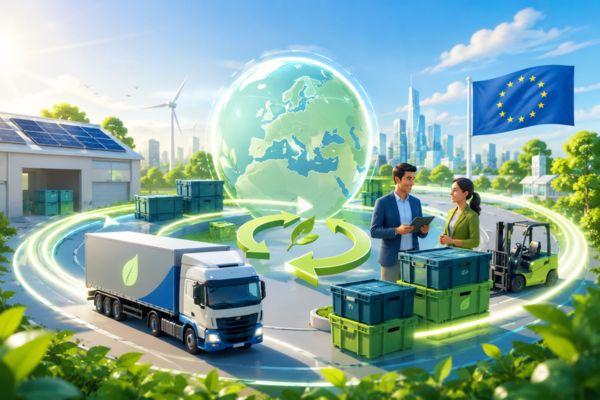
Packaging Traceability Is Becoming a Traceable Operational Asset
For decades, many companies treated packaging as a temporary shipping component that disappeared from operational visibility once the product was delivered. That approach is gradually changing.
As reusable packaging systems become more common, packaging itself is increasingly being managed as a traceable operational asset. Companies want to know where packaging units are located, how often they are reused, how efficiently they move between facilities, and whether losses can be reduced across logistics operations.
This transition is particularly important in industrial B2B environments where packaging circulates continuously between manufacturers, suppliers, warehouses, distributors, and end customers. In these supply chains, packaging availability directly influences operational continuity and transportation planning.
The ability to monitor packaging flows is therefore becoming part of broader supply chain visibility strategies rather than a standalone packaging issue. According to operational trends observed by EcoHandling, global manufacturers and importers are increasingly evaluating reusable packaging systems that can support long-term traceability and more controlled return logistics processes across multiple countries.
Supply Chains Are Becoming More Circular
One of the most significant operational changes taking place across Europe is the movement away from one-direction logistics models toward more circular supply chain structures.
Traditionally, many packaging flows ended after delivery. Once products reached destination, packaging was often discarded, recycled locally, or removed from operational planning. Circular logistics models introduce a different approach where packaging remains part of an ongoing operational cycle.
This means that supply chains increasingly require structured return flows, collection coordination, packaging recovery processes, and reuse management across multiple countries and logistics partners. As these systems expand, companies need greater operational visibility to ensure packaging assets continue moving efficiently through the network.
The transition toward circular logistics is creating new operational responsibilities for exporters and importers alike. Businesses are beginning to evaluate not only how products move into Europe, but also how packaging moves back through the supply chain after delivery.
EcoHandling, which specializes in reverse logistics and reusable packaging operations with global deployment capabilities, is seeing increasing interest from companies seeking to establish more organized return flows and reusable packaging infrastructures supporting continuous international shipment programs.
Visibility Is Becoming Part of Logistics Efficiency
The growing demand for traceability is not driven only by sustainability discussions. It is also strongly connected to operational efficiency.
Limited visibility into packaging movement can create multiple operational challenges, including packaging shortages, inefficient return cycles, unnecessary replacement costs, and inconsistent logistics coordination. As a result, companies are increasingly examining how packaging visibility can support better planning and improved resource utilization.
This is encouraging organizations to integrate packaging monitoring into broader logistics operations. Tracking systems, barcode identification, packaging status visibility, and return coordination processes are gradually becoming part of modern supply chain infrastructure.
The objective is not simply to monitor packaging for compliance purposes. The larger goal is to improve operational control across increasingly complex international logistics networks. Reusable industrial systems such as EcoBox are increasingly being evaluated within these discussions because they support repeat logistics cycles while enabling better packaging visibility and asset management throughout the supply chain.
Traceability Is Supporting the Next Generation of Global Logistics
As European supply chains become more interconnected, traceability is emerging as a central component of future logistics operations. Companies moving goods into Europe are beginning to recognize that reusable packaging systems require more coordination, more visibility, and more structured operational processes than traditional one-way packaging models.
This transition is changing how organizations think about packaging management. Rather than functioning as a disposable transport expense, packaging is increasingly becoming part of a long-term operational infrastructure supporting international trade.
Within this evolving environment, many companies are reassessing how reusable packaging programs, reverse logistics coordination, and packaging visibility systems fit into their future supply chain strategies. Businesses that develop stronger packaging traceability capabilities may be better positioned to support future importer expectations, improve operational efficiency, and participate in the next generation of circular supply chain networks entering Europe.
Companies operating global reverse logistics infrastructures, such as EcoHandling, are already participating in this operational transformation by supporting reusable packaging flows, return coordination, and cross-border packaging management programs designed for increasingly circular and traceable supply chain environments.